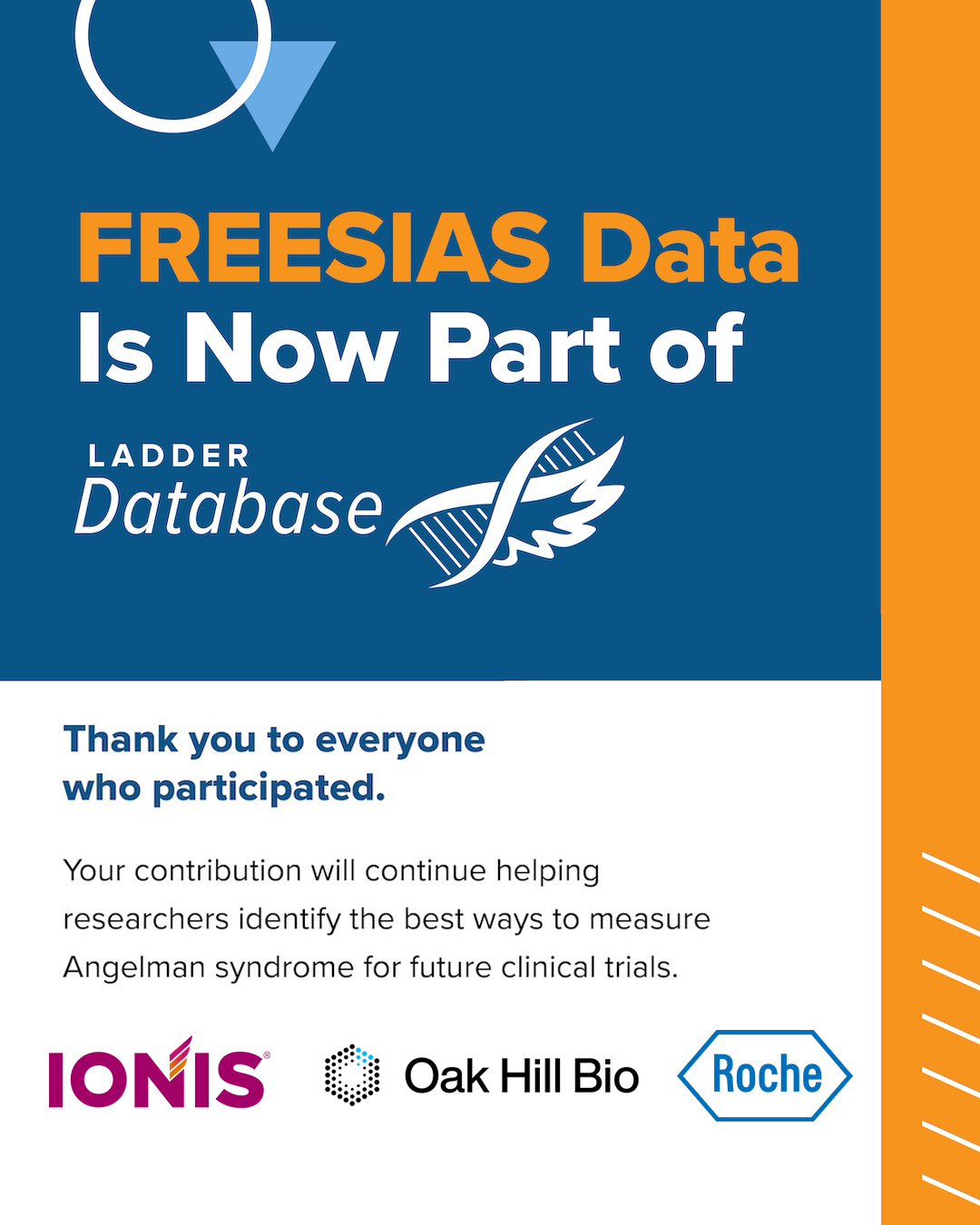
Data from the FREESIAS natural history study has officially been transferred to the LADDER database.
To everyone who participated in FREESIAS, thank you!
Read the community letter to learn more:
Dear Angelman Syndrome Community,
We are pleased to share an update on the prospective, longitudinal, observational, FiRst Endpoint-Enabling Study in Angelman Syndrome (FREESIAS) clinical study. The main goal of FREESIAS was to find the best ways to measure the signs and symptoms of Angelman syndrome, both in the clinic and at home, for use in future clinical trials.
Data from FREESIAS have now been transferred to the LADDER database, helping ensure that the valuable information generated through this study can continue to support future Angelman syndrome research and drug development efforts.
LADDER (Linking Angelman and Dup15q Data for Expanded Research) which is funded by the Angelman Syndrome Foundation, combines information from research studies, clinic visits, registries, and families into one secure database, helping researchers learn more about Angelman syndrome and speed the development of new treatments while reducing the need for families to provide the same information multiple times.
From the beginning, the FREESIAS study was designed with a shared goal: to deepen understanding of possible endpoints for use in clinical trials of potential treatments for Angelman syndrome. To accomplish that goal, FREESIAS was established as a unique pre-competitive collaboration between industry, (Roche, Ionis and Biogen), researchers, clinicians, patient advocacy organizations and caregivers of individuals living with Angelman syndrome.
Today, we are excited to see that vision come full circle.
We would like to express our sincere gratitude to the individuals with Angelman syndrome, their families and caregivers, study investigators and site teams, advocacy organizations including the Angelman Syndrome Foundation (ASF) and Foundation for Angelman Syndrome Therapeutics (FAST), and all those who contributed to the success of FREESIAS.
Scientific progress is built on partnership, trust, and shared learning. We hope that making FREESIAS data available through LADDER will help support future discoveries and ultimately contribute to better outcomes for individuals living with Angelman syndrome.
Thank you for taking part in this journey.
Sincerely,
Roche
Oak Hill Bio
Ionis Pharmaceuticals