One of the hardest moments in the Angelman community is when we learn that someone with Angelman syndrome has passed away.
No matter how much time has passed since diagnosis, no matter how many years we’ve been walking this road, that news can stop us in our tracks. For many families, especially those earlier in their journey, it can trigger fear, anxiety, and a flood of unspoken questions: Could this happen to my child? Did I miss something? Am I doing enough?
I want to speak directly to that moment.
Over the past seven years, both as the CEO of the Angelman Syndrome Foundation and as a mom to a son living with Angelman syndrome, I have learned that when a death occurs in our community, families don’t just grieve the loss of that individual—we often grieve quietly with our own unspoken fears.
What the Data Tells Us
It’s important to ground ourselves in what we know—not just what we feel—especially in moments of fear or uncertainty.
A large, community-sourced study titled Community-Sourced Reporting of Mortalities in Angelman Syndrome (1979–2022) gathered and verified information on 220 deaths of individuals with Angelman syndrome through public records and caregiver reports. This work was led by caregivers, clinicians, and researchers within the Angelman community to better understand mortality patterns in the absence of long-standing epidemiologic data.
The findings reinforce an important truth: Angelman syndrome is not a degenerative or terminal condition, and life expectancy appears to be normal. Individuals with Angelman syndrome commonly live into adulthood, and many into later adulthood.
When deaths do occur, they are most often associated with specific, identifiable medical risks, rather than Angelman syndrome itself. The most commonly reported causes of death included:
- Respiratory illness, such as pneumonia or other complications
- Accidents, particularly in individuals with limited safety awareness
- Seizures and epilepsy-related complications
The study also identified sudden unexpected death in sleep (SUDS) as a less common but notable finding. Given the high prevalence of epilepsy in Angelman syndrome, some of these cases may overlap with sudden unexpected death in epilepsy (SUDEP).
Importantly, causes of death varied by age and differed from those seen in the general population—highlighting areas where proactive medical care, seizure management, respiratory monitoring, and safety supports can make a meaningful difference.
While this study has limitations inherent to community-sourced data, it represents a critical first step in understanding mortality risks in Angelman syndrome and helps inform both families and clinicians about where attention, prevention, and support matter most.
What Families Can Do
When fear creeps in, there are tangible steps families can take, not from a place of panic, but from empowerment:
- Talk with your care team about seizure control, aspiration risk, sleep safety, and respiratory health
- Review emergency plans, especially around seizures and illness
- Ensure regular follow-up with neurology and primary care
- Ask questions—there is no such thing as asking too much when it comes to your child’s safety
- Take care of yourself, too. Anxiety is a signal, not a failure

Free Mental Health Support Through ASF
If you have experienced a loss or hearing about a loss has stirred anxiety or emotional overwhelm, you do not have to carry that alone. Support is available, and reaching out is a form of strength.
The ASF offers free counseling support for Angelman families, including:
- Access to counseling and emotional support for caregivers
- Resources for siblings, who carry worry and grief quietly
- Guidance for families navigating acute stress, trauma, or loss
- Education focused on caregiver burnout, resilience, and long-term emotional health
Holding Space for Grief Without Carrying It Alone
When someone in our community passes, it is okay to grieve for them and to feel shaken. It is okay to step back from social media if you need to. It is okay to ask for clarity instead of sitting with fear.
What I hope families hear most clearly is this: you are not walking this road alone. Our community holds space for grief, fear, love, and hope together.
Our community is strong, informed, and deeply invested in improving care, safety, and quality of life for individuals with Angelman syndrome across their lifespan. And while loss is part of any human experience, so is resilience, progress, and hope.
If difficult news has stirred fear or questions for you, please reach out—to ASF, to your clinicians, or to another parent who understands. We are meant to carry this together.
With care and steadiness,
Amanda Moore
CEO, Angelman Syndrome Foundation
Additional Resources
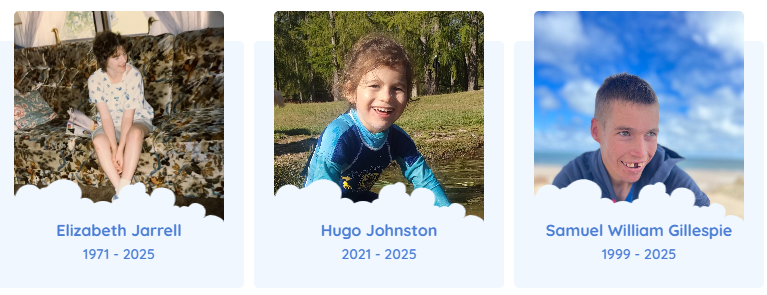
In Memory Wall
Add a loved one you have lost, or visit the In Memory Wall to honor those who live on in memory.
Support Now
Reduce the overwhelm during major life moments. Support Now can help with fundraising, meals, chores, and whatever life brings.